Hope Creek
Lost and FoundHope Creek is presented as a modest rural town whose single central road, local businesses, homes, church, park, and surrounding dirt roads provide the social and emotional setting for two separate lives to be redirected. For Bethany, it is an escape from a marriage in which she had lost herself; for Joshua, it is the place to which he has returned after a privileged, unsettled life. Its significance lies in the contrast between its plainness and the transformations it makes possible: professional renewal, local belonging, and the first movement toward romance.
A Place of Escape and Reinvention
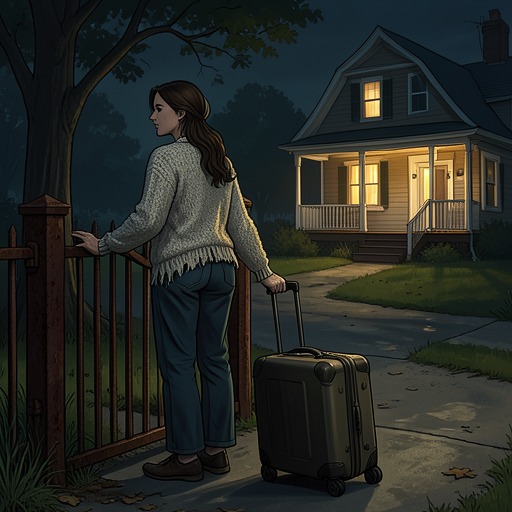
Bethany reaches Hope Creek after leaving Bryan, her college sweetheart and unfaithful husband. She had spent years catering to him and had gradually lost both her identity and her desire to cook, a particularly painful loss for a professional chef. Rather than remaining in the life she had built around the marriage, she packed her boxes and left. Taking work in a dirt-town, hole-in-the-wall restaurant in Hope Creek becomes a deliberate retreat from the polished world associated with her former relationship and with the Ivy League, business, and party culture she had known. The town therefore functions less as a destination chosen for status than as a place where she can recover the part of herself that her previous life had suppressed.
Bethany’s description of Hope Creek as an escape gives the setting a restorative purpose. The town is not idealized as glamorous or socially elevated; its value is precisely that it offers distance from the performance and obligations of her former life. In Hope Creek, making lemonade from the circumstances left by divorce means accepting an apparently diminished setting as the condition of a possible return to purpose.
The Town’s Physical and Social Layout
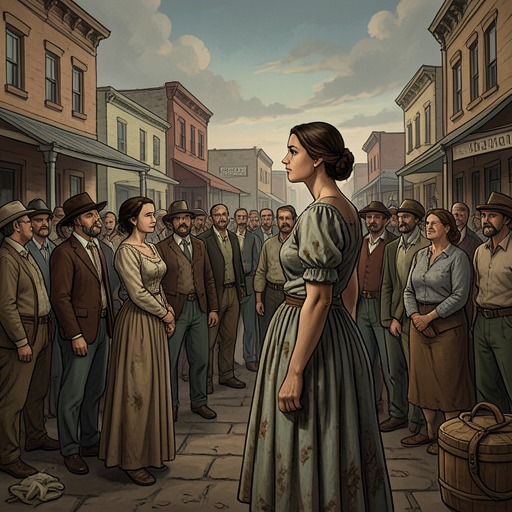
Hope Creek is organized around a single main inlet: one paved road runs through the center of town and connects the signs welcoming travelers to Hope Creek. Along that road are stores, houses, quaint yards, a church, and a park. The description establishes a compact community in which public and private life sit close together, and where movement through town naturally exposes people to one another. The town’s scale makes it a setting of recurrence rather than anonymity: roads lead back toward familiar places, and local encounters can quickly become social knowledge.
The route into town also includes dirt roads, emphasizing the contrast between rural approach and the more settled central strip. That transition gives Hope Creek a tangible threshold quality. Characters arrive from elsewhere, cross into a close-knit local environment, and find that the town’s ordinary spaces can become consequential meeting grounds.
Joshua’s Home Ground
Joshua lives in Hope Creek, as George makes clear when introducing him to Eve. Joshua’s connection to the town is not merely residential. He had moved back there a year earlier after a life shaped by Ivy League schools, business, and parties. His return places him in a different social world from the women he had previously met, whom he regarded as snobbish, rude, or primarily interested in money. Hope Creek thus marks a conscious retreat from a wealthy and performative environment toward a more grounded local existence.
The town also connects Joshua to a network of recognizable residents. George identifies Joshua as a local boy, making Joshua part of the town’s social fabric rather than a detached outsider. That familiarity matters when Eve enters the community: her arrival is immediately legible through Joshua’s local ties, and the place begins to mediate their relationship before either has fully defined it.
Encounters and Local Life
Hope Creek becomes the setting for Eve’s arrival and her developing contact with Joshua. After traveling with Joshua and Billy the Kid toward Heather’s Forge, Eve later follows the route back toward Hope Creek. Joshua’s attention shifts as he watches her drive ahead of him; by then, he is newly conscious of his attraction to her after a long period without thinking about a woman in that way. The town road therefore carries more than travelers: it carries the change from chance acquaintance to personal interest.
Their return ends at Cowboys n’ Cuts Restaurant, where Eve parks and Joshua pulls up beside her to thank her for the previous day. The restaurant gives the town a concrete social and commercial center, while the adjacent vehicles preserve the rural texture of the encounter. Their exchange is small and public, but it extends the connection formed on the road and places the emerging relationship inside Hope Creek’s everyday geography.
Narrative Significance
Hope Creek links the book’s two reinvention arcs without making the setting itself grandiose. Bethany arrives there to escape the identity imposed by marriage and to recover her vocation; Joshua has returned there after finding that privilege and metropolitan social life have not supplied the kind of connection he wants. The same town consequently shelters a professional reset and a romantic beginning.
Its close-knit structure also contrasts with the social performance seen elsewhere. At a high school reunion, people initially present curated versions of themselves, and Bethany’s relationship with Ransom is publicly maintained through a cover story that includes his role as a chef and caterer. Hope Creek offers a different kind of setting: people still meet through assumptions and introductions, but the town’s ordinary roads, restaurants, homes, and local relationships make sustained contact possible. As a result, Hope Creek stands for a smaller, less polished life that is not presented as failure, but as the environment in which more genuine identities and attachments can take shape.